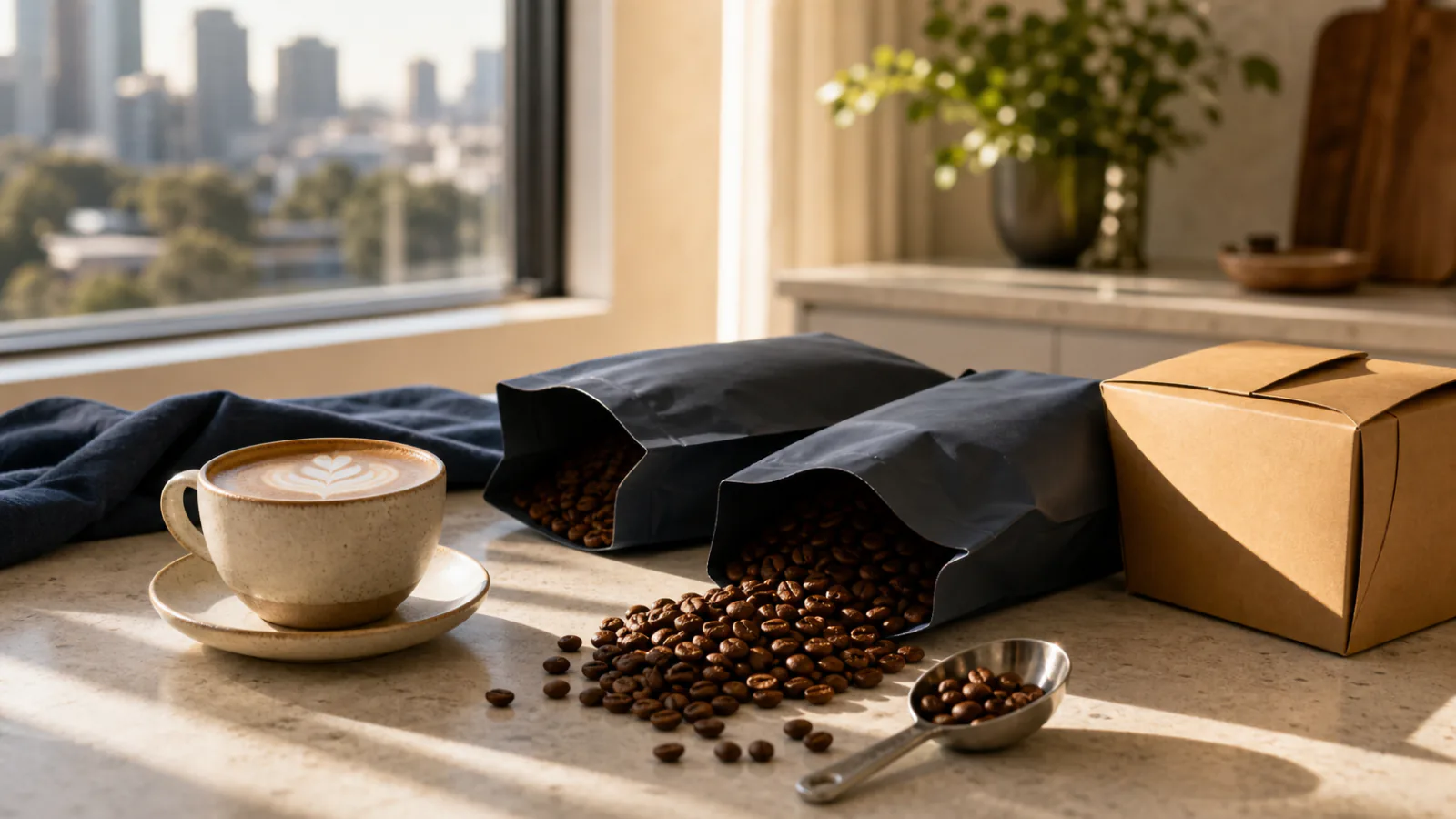
Coffee storage does not need special theatre. In a Sydney kitchen, the goal is simply to protect roasted beans from heat, oxygen, moisture and light. Keep a small working supply sealed in a cool cupboard, buy an amount that fits your routine and freeze only the coffee you will not use soon.
Keep whole coffee beans in their resealable bag or an airtight, opaque container. Store them in a cool, dry cupboard away from the oven, dishwasher, direct sun and steam. Press excess air from the bag before sealing it. Grind only what you need for each brew.
The four enemies of coffee freshness
Roasting creates the aroma and flavour we want, but it also starts a gradual ageing process. Four parts of an ordinary kitchen speed that process up.
Oxygen
Once a bag is open, oxygen reaches the beans and their aromatic compounds gradually fade. A wide, half-empty container holds more air than a container sized for the amount of coffee inside. Open the coffee briefly, take what you need and seal it again.
Heat
Warm storage accelerates flavour loss. Sydney summers can turn a sunny bench or cupboard above the oven into a poor place for coffee. Choose the most temperature-stable cupboard you have, ideally low and away from heat-producing appliances.
Moisture
Roasted coffee is porous and can absorb moisture and surrounding odours. Steam from a kettle, sink or dishwasher is not helpful. Always use a dry scoop and close the container before making the rest of the drink.
Light
Direct light adds heat and can contribute to flavour degradation. A clear jar may look attractive on a bench, but an opaque bag or container inside a cupboard is a better home.
The best place to keep coffee at home
For the bag you are actively using, choose a cupboard that stays cool and dry throughout the day. Avoid these common locations:
- on top of the espresso machine, which warms up during use;
- beside the oven, cooktop or air fryer;
- above the kettle, where steam rises;
- on a bench that receives afternoon sun;
- under the sink, where humidity and household products can be a problem.
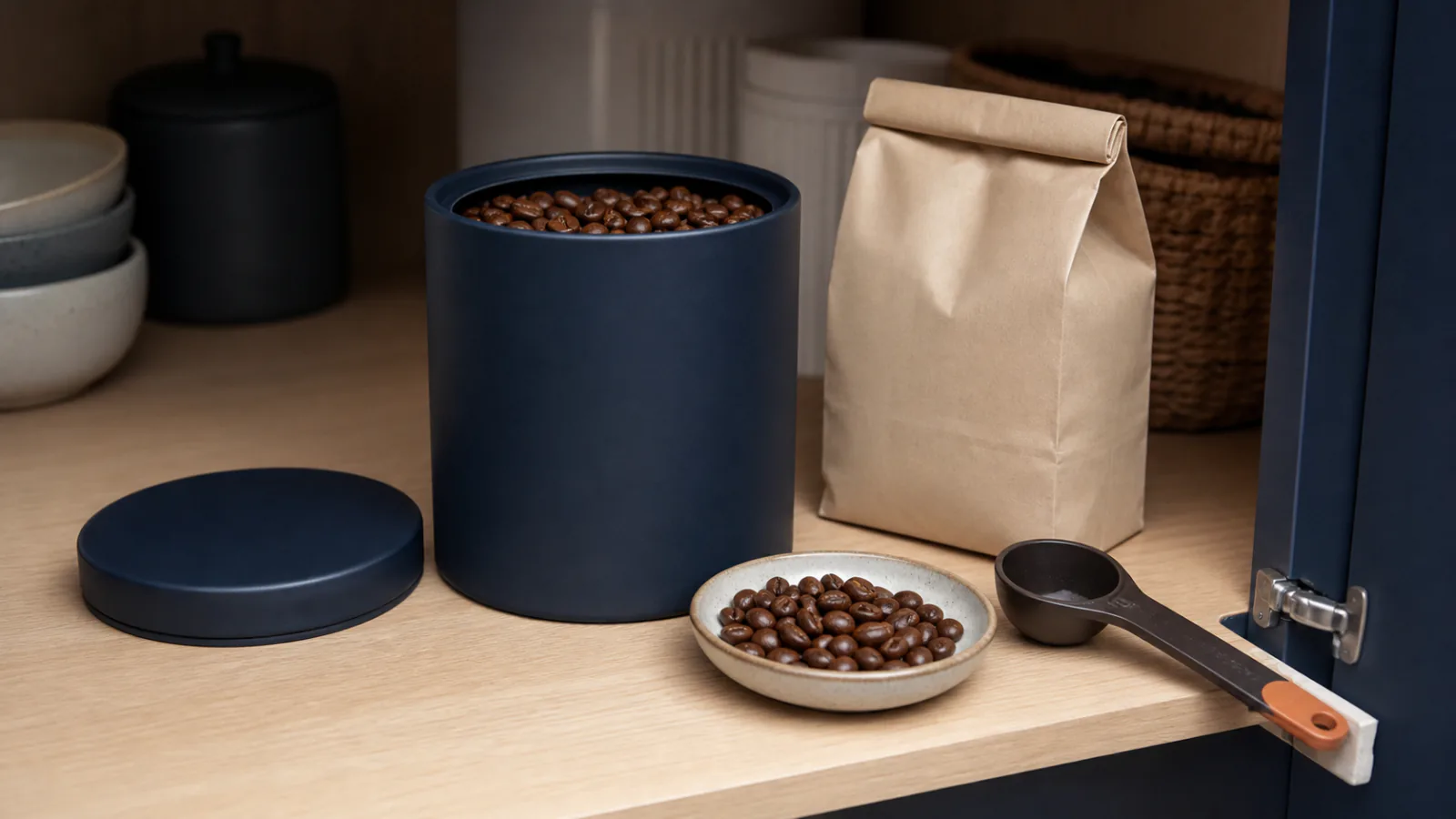
The original coffee bag is often perfectly practical if it is opaque, has a reliable zip and can be pressed down as the coffee is used. An airtight container is useful when the bag does not reseal well. A vacuum-style canister can reduce the amount of air around the beans, but it does not replace sensible buying and storage.
If you transfer coffee into a container, keep the product name and roast information with it. This makes it easier to remember what you enjoyed and how the grinder was set.
Should coffee beans go in the fridge or freezer?
Skip the fridge for everyday storage
A refrigerator is cool, but it is also humid and full of food aromas. Repeatedly taking a container in and out can create temperature changes and condensation risk. For a bag you use every day, a cool cupboard is simpler and more reliable.
Use the freezer for a planned surplus
Freezing can be useful when you buy a large bag but will not finish it in your normal freshness window. The important part is portioning:
- Divide unopened or recently opened beans into small airtight portions.
- Use containers or bags that keep moisture and freezer odours out.
- Freeze each portion once rather than opening the same frozen bag every day.
- Remove one portion when the current coffee is nearly finished.
- Let the sealed portion return to room temperature before opening, so condensation forms outside the container rather than on the beans.
Label each portion with the coffee and date. Freezing is a way to manage extra coffee, not a reason to buy far more than you need.
A better daily coffee routine
Small habits protect flavour better than an elaborate storage product:
- Measure beans quickly and reseal the bag straight away.
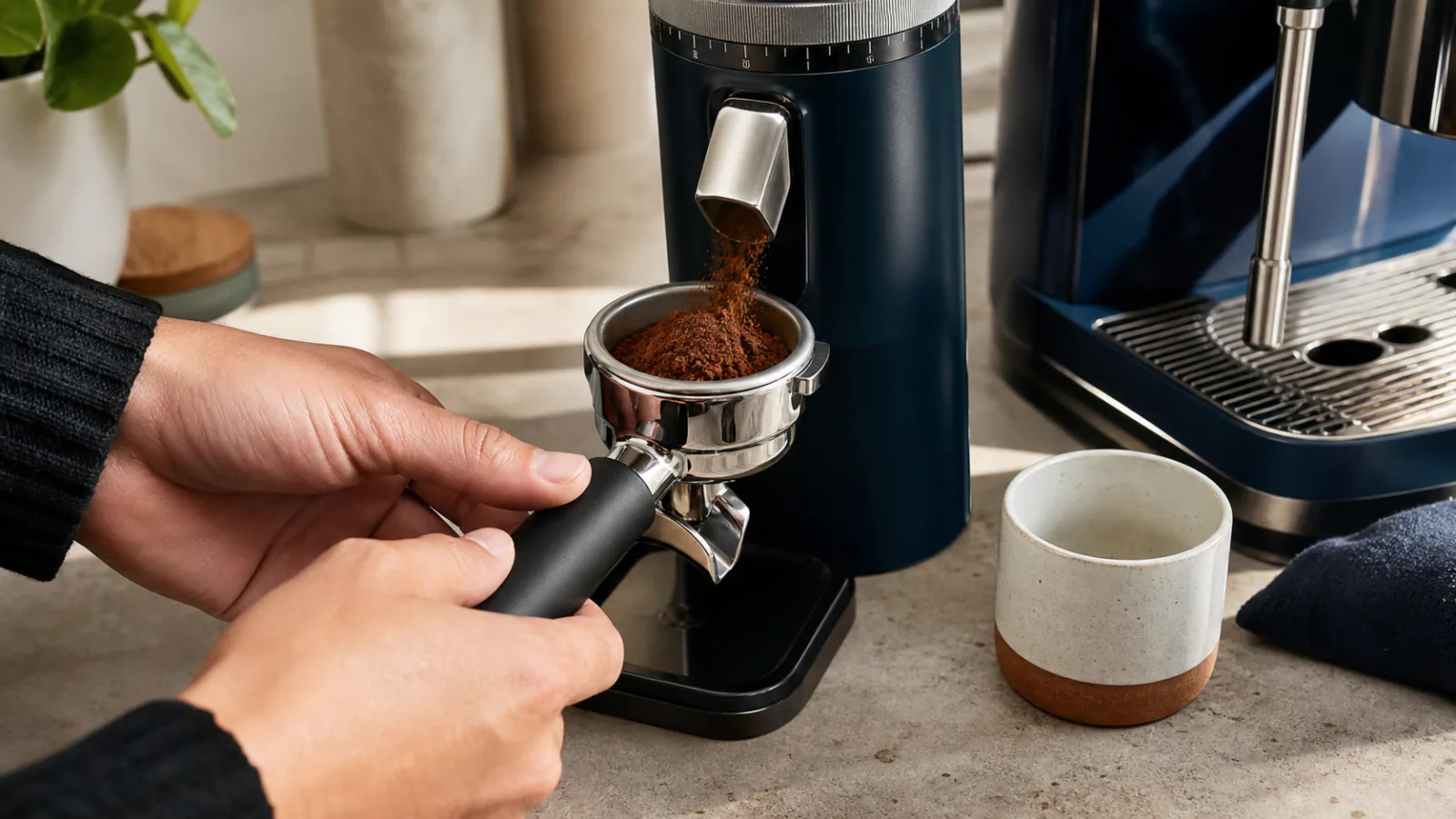
- Grind immediately before brewing rather than filling the grinder hopper for the week.
- Keep only a day or two of beans in the hopper if removing them is inconvenient.
- Use clean, dry containers and avoid adding fresh coffee on top of old residue.
- Finish one open bag before opening several more, unless you deliberately rotate coffees.
If you enjoy switching between espresso, single origin and decaf, split each bag into smaller containers. You will expose the full supply to less air every time you change coffee.
Buy the right amount for your household
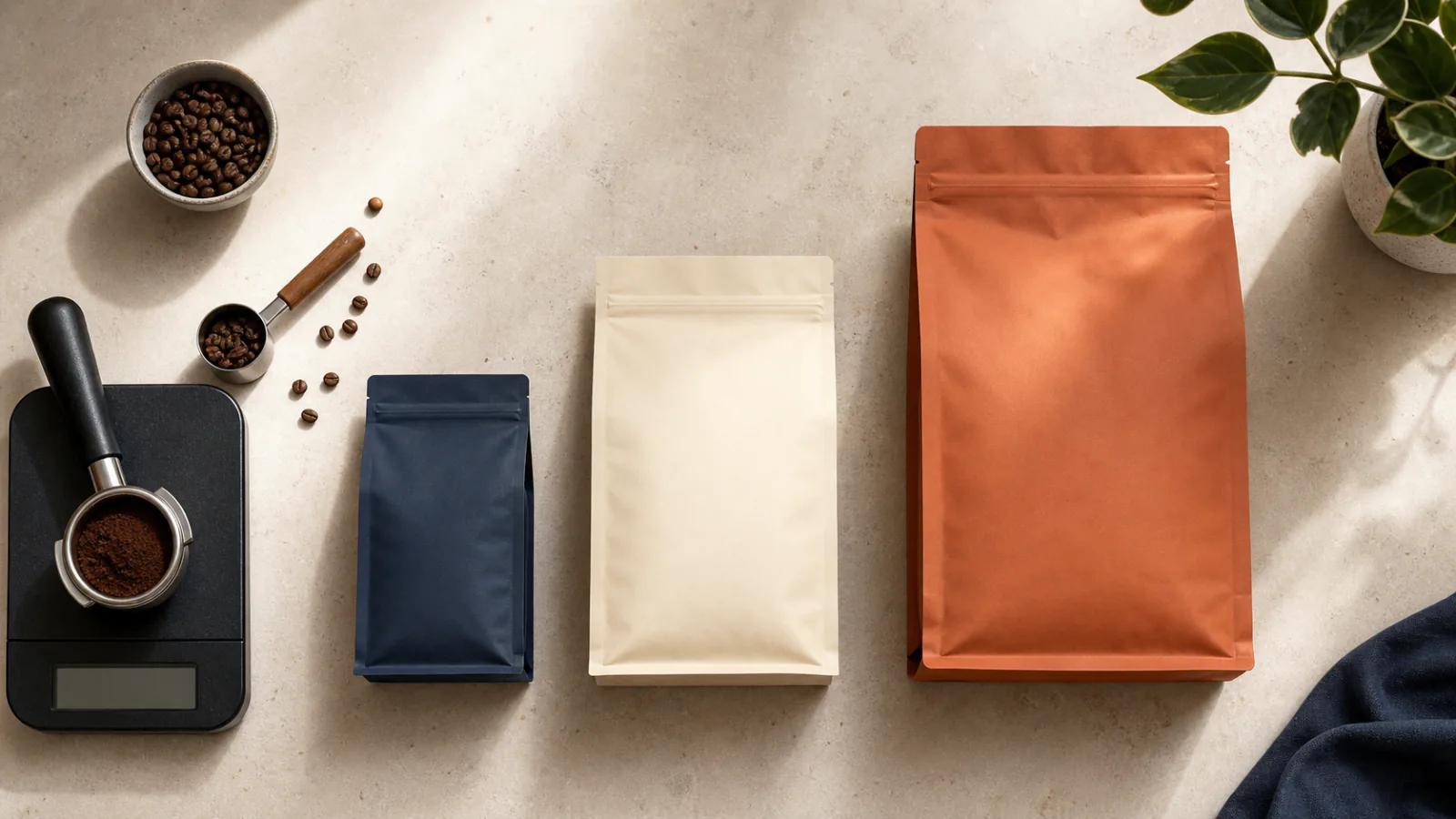
At an 18 g espresso dose, one daily coffee uses about 126 g per week. Two daily coffees use about 252 g. A two-person household making two coffees each per day can use about 500 g a week.
| Household use | Approx. weekly use | Practical starting size |
|---|---|---|
| 1 espresso per day | 126 g | 250 g |
| 2 espressos per day | 252 g | 250 g or 500 g |
| 3 espressos per day | 378 g | 500 g |
| 4 espressos per day | 504 g | 500 g or 1 kg with portioning |
Allow a little extra when dialling in a new coffee. Our 250 g, 500 g and 1 kg bag guide includes calculations for both espresso and filter brewing.
Is the coffee stale, or does the grinder need adjusting?
As coffee ages, espresso may run faster and produce less crema. That does not mean the bag suddenly became unusable. Try a slightly finer grind before discarding it.
Storage is more likely to be the problem when aroma has become noticeably flat, the brewed coffee lacks sweetness across multiple recipes, or the beans have been left unsealed near heat or moisture. A single sour or bitter shot is more often a recipe problem. Use the troubleshooting table in our home espresso bean guide before changing everything at once.
Coffee storage questions
Can I store coffee beans in a glass jar?
Yes, if the jar seals well and stays in a dark cupboard. A clear jar left on the bench exposes the coffee to light and heat, so appearance should not decide the storage location.
Should I keep beans in the grinder hopper?
Only keep a small working amount in the hopper. Many hoppers are clear and not fully airtight, and an espresso machine can warm the area around them. Keeping the main supply sealed is better.
Can frozen coffee go straight into the grinder?
Some home brewers grind frozen single portions successfully, but the simplest general routine is to let a sealed portion reach room temperature before opening it. This reduces condensation risk and avoids repeated thawing and refreezing.
Does an airtight canister make coffee last indefinitely?
No. It slows exposure to air but cannot stop coffee ageing. Use it alongside a sensible bag size and regular delivery schedule.