The best coffee for a home espresso machine is not a single bean or roast. It is the coffee that suits your usual drink and gives you enough room to adjust the grind. Start with flavour, use a repeatable recipe and change one variable at a time.
For flat whites and lattes, begin with a medium-dark espresso blend with chocolate, caramel or nut notes. For espresso and long blacks, try a balanced blend or a medium single origin. Use about 18 g of ground coffee, aim for roughly twice that weight in the cup, then adjust the grind to improve the taste. Treat those numbers as a starting recipe, not a rule.
Start with the coffee you actually drink
Machine compatibility matters, but your cup matters more. Two people can use the same machine and need completely different beans because one drinks a large oat flat white and the other drinks a short black.
Mostly milk coffee
Milk adds sweetness and softens acidity, so a coffee needs body and a clear flavour to stay present. Medium-dark espresso blends are a reliable choice. Notes of milk chocolate, caramel, brown sugar and roasted nuts tend to feel familiar in a flat white, latte or cappuccino.
Mostly espresso or long black
Without milk, you will notice acidity, sweetness and finish more clearly. A balanced espresso blend is the easiest place to begin. Once your technique is consistent, a medium single origin can introduce brighter fruit or floral flavours.
A mix of drinks
Choose versatility over extremes. A medium or medium-dark blend that is recommended for both espresso and milk coffee will be easier to share across the household than a very light or very dark roast.
Choose a roast profile, not a colour contest
Roast descriptions are not perfectly standardised between roasters, but they still help narrow the style:
| Roast profile | Typical character | Useful starting use |
|---|---|---|
| Medium | More origin character, brightness and a lighter body | Long black, espresso and filter |
| Medium-dark | Balanced sweetness, fuller body and lower perceived acidity | Flat white, latte and everyday espresso |
| Dark | Bold roast character, heavier body and a more intense finish | Larger milk drinks and strong espresso |
If your espresso machine uses a pressurised or dual-wall basket, a medium-dark blend can be especially forgiving. A single-wall basket offers more control, but it also makes grinder consistency and fresh grinding more important.
Blend or single origin?
A blend combines coffees to create a repeatable flavour and brewing behaviour. For a new home setup, that consistency is valuable because you can learn what a grind adjustment does without the coffee changing dramatically from bag to bag.
A single origin comes from one defined origin and often highlights more distinctive seasonal flavours. It can be excellent as espresso, but a lighter or brighter coffee may need a finer grind, a different yield or a higher brew temperature than your everyday blend.
If you are still learning your machine, buy one espresso blend and keep your dose steady for the whole bag. Once the shots are repeatable, experimenting with single origins becomes much more useful because you can separate a coffee difference from a technique problem.
Dial in the beans with one simple recipe
Dialling in means adjusting the grinder and recipe until the espresso tastes balanced. You do not need to copy a cafe recipe exactly. You need a repeatable baseline.
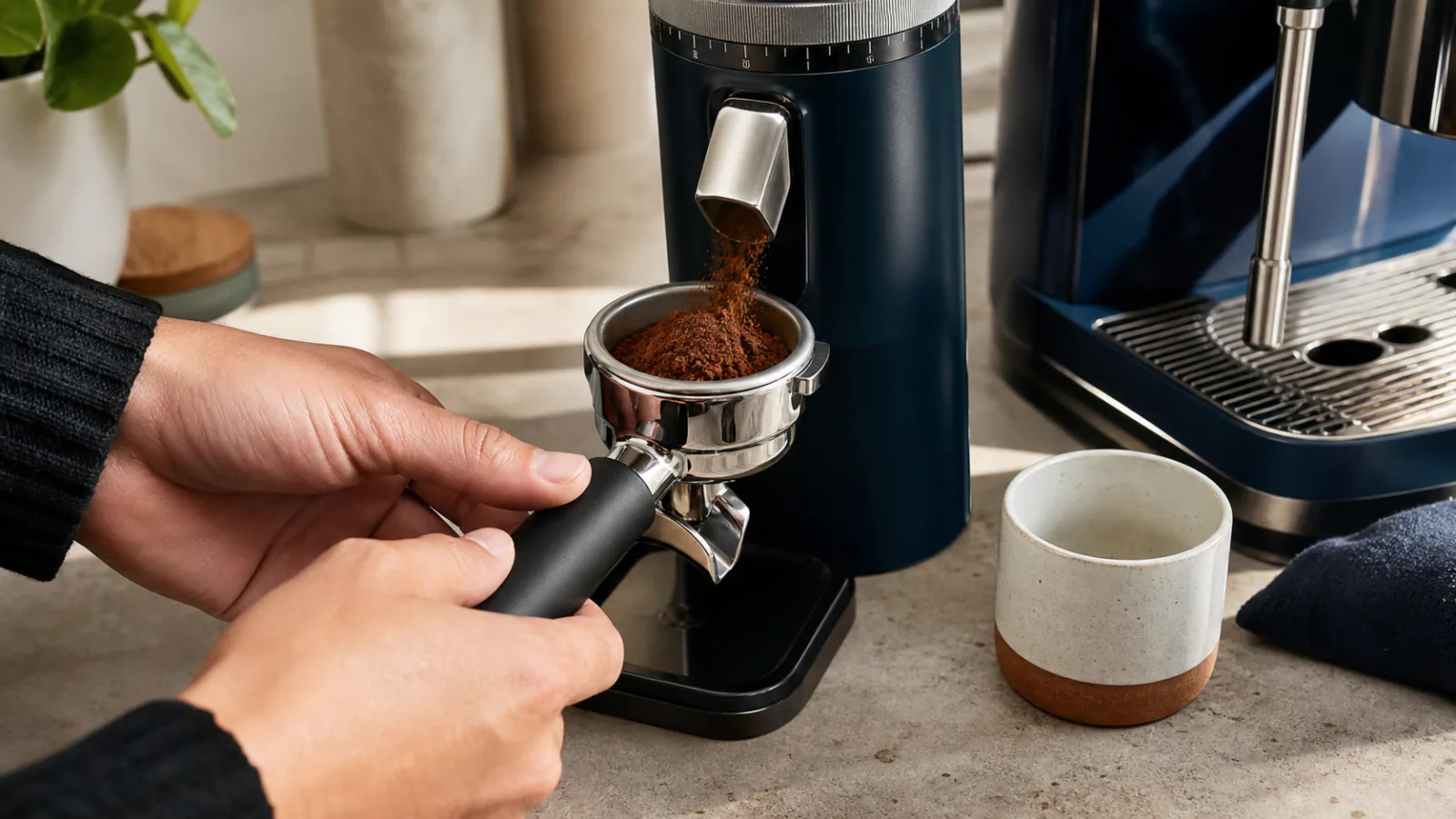
18 g coffee in → 36 g espresso out → about 25 to 30 secondsThis is a common starting point for a double espresso basket. Your basket may be designed for a different dose, so check the machine guidance and avoid overfilling it.
- Warm the machine and portafilter. A stable temperature makes comparisons more meaningful.
- Weigh the dry dose. Use the same amount for each attempt.
- Distribute and tamp consistently. Keep the coffee bed level and do not try to solve flow problems by tamping harder.
- Weigh the espresso in the cup. Stop at your target yield.
- Taste it. Time is a clue, but flavour is the decision.
- Change only the grind. Go finer if the shot runs fast and tastes thin or sharp. Go coarser if it runs slowly and tastes harsh or dry.
After the grind is close, you can adjust the yield slightly. A shorter yield can add body; a longer yield can open the cup, but may also bring more bitterness if pushed too far.
Troubleshoot by taste, not crema
Crema changes with coffee age, roast and bean composition, so it is not a quality score. Use the taste and flow together.
| What you notice | Likely direction | First change |
|---|---|---|
| Fast, pale shot that tastes sharp or watery | Water is moving through too easily | Grind finer |
| Slow drips that taste bitter, harsh or dry | Water is struggling to pass through | Grind coarser |
| Good espresso disappears in milk | The coffee style is too delicate for the drink | Try a fuller or darker espresso blend |
| Shots vary despite the same setting | Dose or puck preparation is inconsistent | Weigh the dose and improve distribution |
| Older bag needs a different setting | The coffee has changed as it rested | Make a small grind adjustment |
A simple match for the Peak Hour range
- 6:30 Everyday Espresso: a medium-dark, chocolatey blend for milk coffee and espresso.
- 8:15 Strong Espresso: a darker, bolder blend when you want more intensity through milk.
- Off Peak Single Origin: a rotating medium roast for black coffee and filter brewing.
- After Hours Decaf: a medium-dark decaf for espresso and milk coffee later in the day.
If you are still deciding, the Sydney coffee bean buying guide covers freshness, bag size and ordering as well as flavour.
Home espresso bean questions
Can I use any coffee beans in an espresso machine?
You can brew many coffees as espresso, but the result may not match your drink or experience level. Beans roasted and described for espresso are usually easier to dial in on a home machine than a very light filter roast.
Do I need an expensive grinder?
You need a grinder that can make small, repeatable adjustments for espresso. Price can improve build, speed and consistency, but careful weighing and a suitable espresso grinder matter more than prestige.
Why did my grind setting change with a new bag?
Different coffees have different density, roast development and age. Even the same blend can need a small adjustment as it rests. Treat the grinder number as a temporary setting, not a universal recipe.
How much coffee should I buy while learning?
A 500 g bag gives most people enough coffee to dial in and then enjoy a series of consistent shots. If you only make one coffee a day, 250 g may suit better. Use the bag size calculator to match your daily use.