The right coffee bag size is a small calculation, not a test of commitment. Work out how many grams your household brews each day, multiply by the number of days between orders and add a little for dialling in. You will get better value without leaving an oversized bag open for weeks.
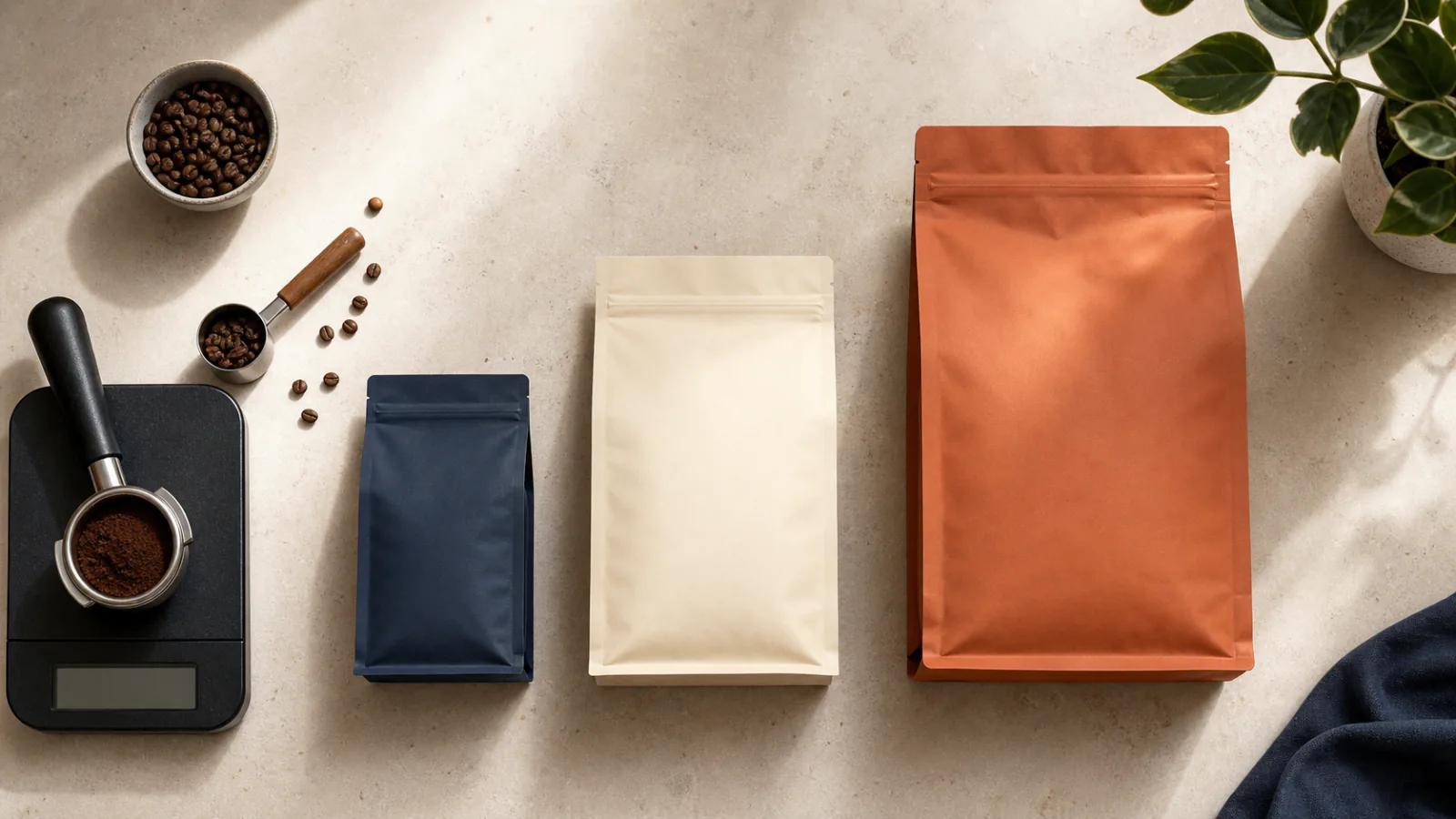
A 250 g bag makes about 13 double espressos at an 18 g dose. A 500 g bag makes about 27, and a 1 kg bag makes about 55. One coffee a day usually suits 250 g. Two coffees a day often suit 500 g. A busy household making four or more a day can use 1 kg comfortably.
Use this quick coffee calculator
Find the dose you use for one coffee, then multiply it by the number of coffees your household makes each day.
Dose per coffee × coffees per day × days = coffee requiredFor example, two 18 g espressos each day use 36 g of beans. Over 14 days, that is 504 g. A 500 g bag is the natural fortnightly size, with a small allowance needed if you waste coffee while adjusting the grinder.
If you do not weigh your coffee yet, use 18 g per double espresso as a planning estimate. Your machine basket may be designed for a little more or less.
How many espressos are in each bag?
| Bag size | At 18 g per coffee | At 20 g per coffee | Best starting use |
|---|---|---|---|
| 250 g | About 13 coffees | About 12 coffees | Trying a coffee or making one a day |
| 500 g | About 27 coffees | 25 coffees | One to two daily coffees |
| 1 kg | About 55 coffees | 50 coffees | Several daily coffees or a busy household |
These totals use full doses only. Expect to use some additional coffee when you open a new bag and adjust the grinder, particularly if you are learning home espresso.
How long will a 250 g bag last?
At one 18 g coffee a day, it lasts almost two weeks. At two coffees a day, it lasts about one week. This makes 250 g useful for tasting a new single origin, keeping decaf alongside a regular blend or brewing one daily coffee.
How long will a 500 g bag last?
At two 18 g coffees a day, it lasts almost two weeks. It is often the easiest balance for a home espresso drinker because there is enough coffee to dial in, settle on a recipe and repeat it without committing to a full kilogram.
How long will a 1 kg bag last?
At four 18 g coffees a day, it lasts about two weeks. At only one coffee a day, it could remain open for nearly two months, so a smaller bag or portioned freezer storage would be more sensible.
Calculate coffee for filter brewing
A practical filter starting point is around 60 g of coffee per litre of water. That is 18 g for a 300 ml mug, 30 g for a 500 ml brewer or 60 g for a one-litre batch. Adjust the ratio to suit the coffee and your taste.
| Brewed coffee | Starting coffee dose | Brews from 250 g | Brews from 1 kg |
|---|---|---|---|
| 300 ml mug | 18 g | About 13 | About 55 |
| 500 ml brewer | 30 g | About 8 | About 33 |
| 1 litre batch | 60 g | About 4 | About 16 |
Do not compare filter servings with espresso shots by cup count alone. A large batch may serve several people, while an espresso dose usually becomes one drink.
Match the bag to your household
Use the number of coffees the whole household makes, including weekend extras and visitors. Then consider whether everyone drinks the same beans.
- One person, one coffee a day: start with 250 g every one to two weeks.
- One person, two coffees a day: choose 250 g weekly or 500 g fortnightly.
- Two people, two coffees each a day: 500 g lasts about a week and 1 kg about two weeks.
- Regular and decaf in the same home: buy two smaller bags so neither sits open for too long.
- Espresso and filter drinkers: separate bags let you choose a roast suited to each method.
When you are trying a coffee for the first time, the smallest available bag reduces risk. Move up a size after you know it works with your machine and tastes good in your usual drink.
Balance value with freshness
A larger bag often costs less per gram, but the saving only counts if you enjoy the whole bag. Buying 1 kg for one daily coffee can trade a lower unit price for a less aromatic final few weeks.
There are three sensible ways to get value without overbuying:
- Order smaller bags more regularly. This is the easiest option when delivery is predictable.
- Share a larger bag across a busy household. High daily use keeps the coffee moving.
- Freeze a large bag in airtight portions. Keep one portion in the cupboard and leave the rest sealed until needed.
Read the Sydney coffee storage guide before portioning a large order.
Set a delivery rhythm you can adjust
A subscription works when its schedule follows your real use. Keep a note of the date you open a bag and the date it runs out. After two orders, you will have a much better estimate than a generic recommendation.
Start conservatively. It is easier to bring the next delivery forward than to build a cupboard full of unopened coffee. A flexible subscription should let you change the bag size or timing, skip a delivery and pause when you travel.
Add roughly one or two espresso doses per new bag to your estimate if your grinder usually needs adjustment. New home baristas may want a larger buffer while building consistency.
Coffee bag size questions
How many cups does 1 kg of coffee beans make?
At an 18 g espresso dose, 1 kg makes about 55 coffees. At 20 g, it makes 50. Filter totals depend on batch size, but at 60 g per litre, 1 kg brews about 16 litres.
Is a 250 g bag enough to dial in espresso?
Yes, but beginners can use several doses while finding the grind setting. A 500 g bag gives more room to learn and then repeat the recipe, provided you drink it regularly.
Should I order two different 250 g bags or one 500 g bag?
Choose two smaller bags if you want variety, use regular and decaf, or brew espresso and filter differently. Choose one 500 g bag when consistency and a simpler grinder routine matter more.
Which beans should I order first?
Match the coffee to your usual drink and machine before choosing the size. Our coffee beans Sydney buying guide gives a quick flavour and brew-method checklist.